

How to Use Constants as a Fitness Coach

Most fitness coaches are already selling three things without any system built to sell them well: a training program written once and reused for every new client, a handful of open coaching slots nobody can actually see on a calendar, and an ongoing accountability group people would happily pay to stay in every month. None of that requires a personal website, a separate booking app, or a Discord server duct-taped to a Substack — it can all live on one page.
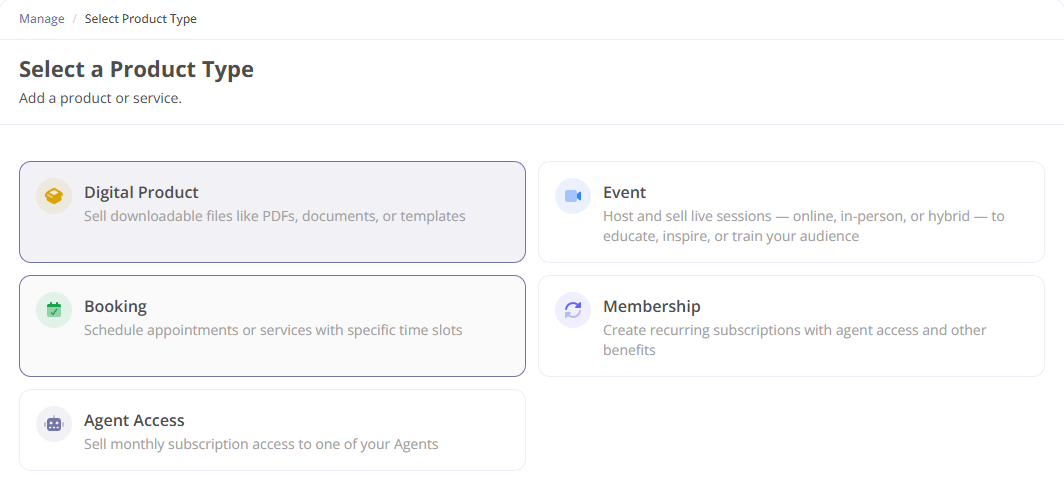
Sell the program you already wrote
Every coach already has a program sitting in a Google Doc or a Notes app somewhere — a 12-week strength block, a marathon build, a mobility routine for people who sit at a desk all day. As a digital product on Constants, that program becomes something a stranger can find, buy, and download the moment they land on your page, instead of something you retype over DM every time someone asks what you actually offer.
Fill the calendar instead of the DMs
Coaching inquiries almost always start the same way: "do you have any openings?" 1:1 Bookings turns that into a real calendar people can grab a slot on directly — an intro call, a form check, a nutrition consult — instead of you tracking availability across five separate conversations by hand. It's the same mechanic covered in more detail in how coaches sell 1:1 time from a link in bio, just built for training sessions instead of consulting calls.
Turn a challenge into an actual event
A 30-day challenge or a group class isn't a post, it's an event with a start date and a hard cap on how many people can join. Constants' Events tool handles the sign-up and the payment for that directly, complete with a set start time and a spot limit, so a challenge becomes something people register and pay for ahead of time instead of something they see mentioned once and forget by the following week.
Give the people who stay somewhere to stay
The clients who stick around longest usually aren't paying for one program, they're paying for ongoing access — weekly check-ins, a running library of workouts, a group that keeps them honest after the first plan is finished. Memberships turn that into recurring monthly access instead of a one-time download nobody reopens after week three, and the renewal happens automatically instead of you chasing a repeat sale every month.
Let the agent field "what do you offer"
New visitors ask the same three questions before they ever send a message: what do you offer, how much does it cost, and are you even taking new clients right now. An Agent trained on your programs, pricing, and availability can answer all three the moment someone lands on your page, at 2am, without you picking up your phone — and it can point them straight at the right product instead of leaving them to scroll and guess.
See what people actually click
Analytics shows page views alongside clicks per link and per item, so instead of guessing which offer to put at the top of your page, you can see directly whether visitors click your program, your booking link, or your membership more — and rearrange the page around what's actually working.
What it actually costs
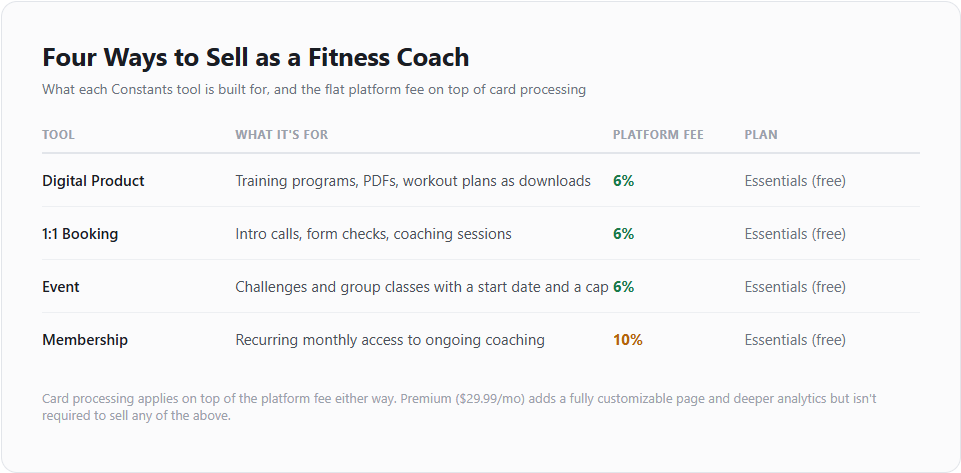
The Essentials plan is free, and everything above works on it from day one. Digital products, bookings, and events carry a flat 6% fee on the sale; memberships run 10%, in the same range most subscription tools charge for recurring billing. Card processing applies either way. Premium is $29.99/mo for a fully customizable page and deeper analytics, but nothing above requires it to get started — the full breakdown is on the pricing page.
One page instead of four disconnected tools
Most coaches end up with the program sold through a Gumroad link, sessions booked through a separate scheduling app, and a group chat that talks to neither of them. A single page that sells the program, books the sessions, runs the challenge, and holds the membership turns four disconnected tools into the one place you can actually see what's converting — which is most of what building a link-in-bio page meant to sell comes down to in the first place.