

MIT researchers unveil faster, greener AI agents
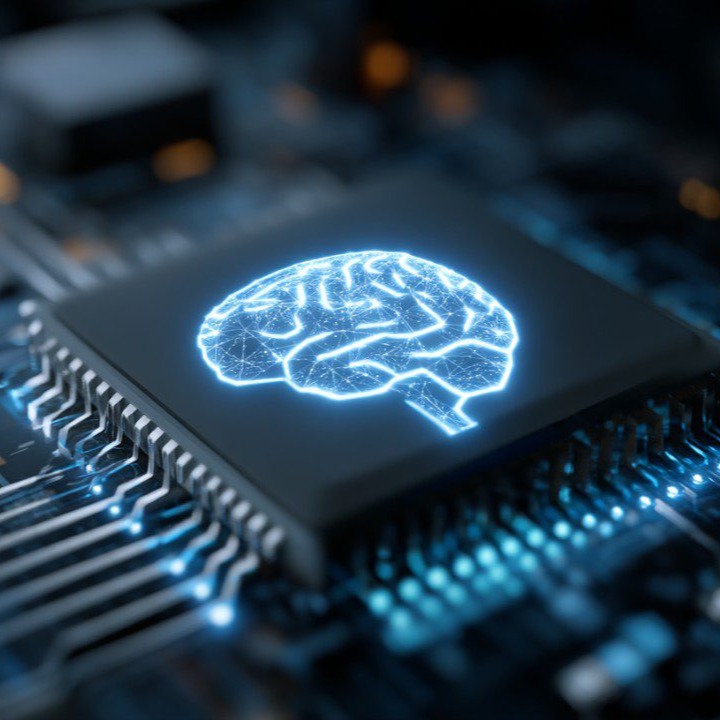
Smarter agents, smaller footprint
MIT scientists just announced a new kind of AI agent architecture that runs faster while using less power — a shift that could make everyday AI tools more sustainable. Their system borrows ideas from solid-state battery research, using new cooling materials to manage heat from dense neural workloads [4]. That’s not just a lab curiosity: energy use is one of the biggest hidden costs of large AI models.
Hardware meets intelligence
Part of the breakthrough comes from pairing these agents with photonic computing — chips that use light instead of electrons to move data. ETH Zurich’s recent work on three-layer photonic systems shows how optical interconnects can make AI chips smaller and faster while cutting energy loss [2]. MIT’s team applied similar principles to agent inference, letting multiple models work together without bottlenecks.
Agents that actually scale
Enterprise adoption of AI agents is already climbing — RBC’s CIO survey found usage expected to double as companies look for co-worker-style digital assistants [3]. The MIT design could help those systems scale without exploding cloud costs. Think of it as giving AI agents a hybrid engine: same intelligence, better mileage.
The bigger picture
Startups like Subquadratic and LinqAlpha are already chasing efficiency from the software side, building multi-agent frameworks that compress data and share computation [1][5]. MIT’s work adds the missing hardware layer — a path toward AI that’s not just smarter, but sustainable enough to run everywhere from phones to data centers.
Sources
- [1] The Miami-based AI startup Subquadratic came out of stealth mode ... — https://www.facebook.com/technologyreview/posts/the-miami-based-ai-startup-subquadratic-came-out-of-stealth-mode-last-month-with/1376894907632989/
- [2] Researchers at ETH Zurich have developed pixels that can not only ... — https://www.instagram.com/p/DaAWMQ0KYQi/
- [3] RBC's latest CIO survey finds no AI token panic, no SaaSpocalypse ... — https://www.facebook.com/techinsider/posts/rbcs-latest-cio-survey-finds-no-ai-token-panic-no-saaspocalypse-and-surging-ente/1381836417149164/
- [4] Scientists Create Bacteria-Based Cooling Material That Could ... — https://www.instagram.com/p/DZ_spS9l30o/
- [5] LinqAlpha Wins Best AI Solution at the 2026 Hedge Fund Services ... — https://www.bastillepost.com/global/article/5961843-linqalpha-wins-best-ai-solution-at-the-2026-hedge-fund-services-awards